Morocco
Ancient cities, High Atlas silence and the Sahara taken in the correct sequence
About This Journey
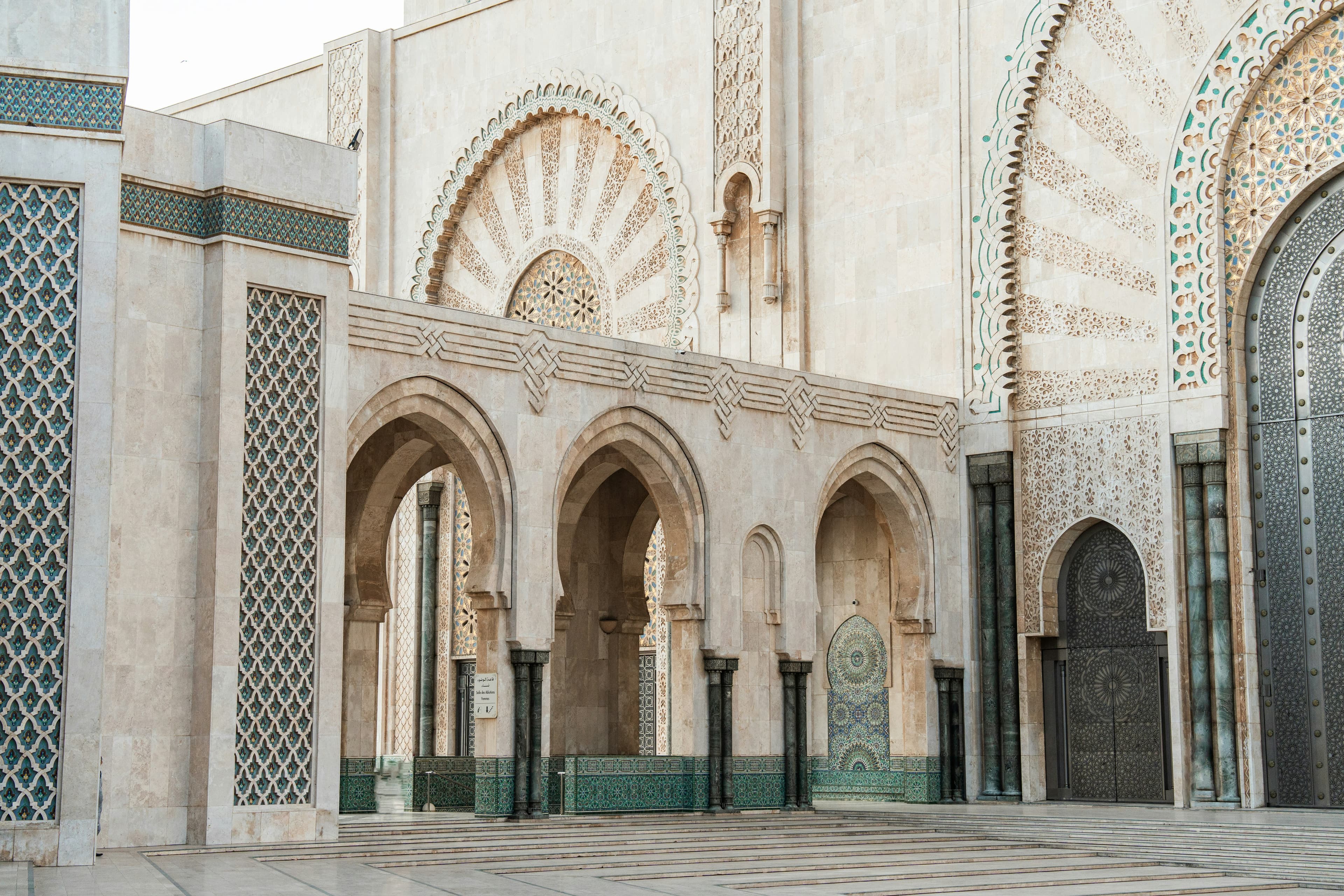
Morocco has a way of arriving before you are ready for it. The medina in Fez begins immediately at the gate — twelve centuries of continuous urban life operating at full volume. From Fez, the country opens southward into the High Atlas, where Richard Branson built a retreat in a Berber village. Then the desert — the Sahara from the edge of Erg Chebbi at the hour before sunset is a sight the camera simply fails to record. Then back through the southern road into Marrakesh. Ten nights, four worlds, taken in the correct sequence.
What's Included
Day-by-Day Itinerary
Arrival in the Ancient City
Fez
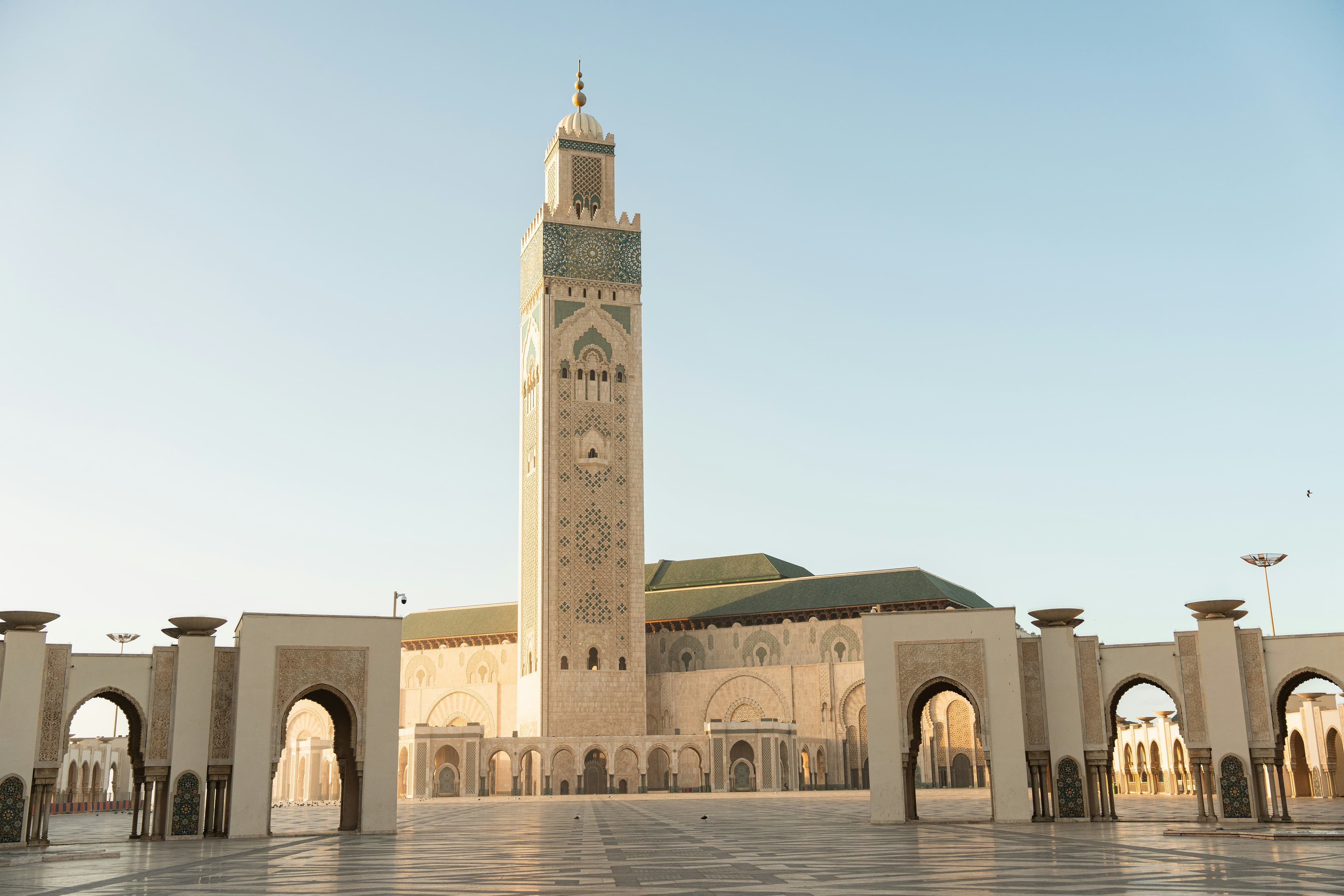
Arrive at Fez-Saïss Airport or via connection through Casablanca and transfer directly into the medina — no city tour today, no introductory briefing. Fez arrives all by itself the moment you step out of the car and the lanes of Fez el-Bali close around you. Check into Riad Fes, which occupies a restored 15th-century courtyard palace in the heart of the medina, and spend the afternoon at whatever pace the jet lag and sensory weight of the place demand. The riad's rooftop terrace looks out over a skyline of minarets and terracotta that has not changed substantially in several centuries. The evening is yours — dinner at the riad's restaurant, which takes Fassi cuisine seriously enough to be worth staying in for.
The World's Oldest Living City
Fez
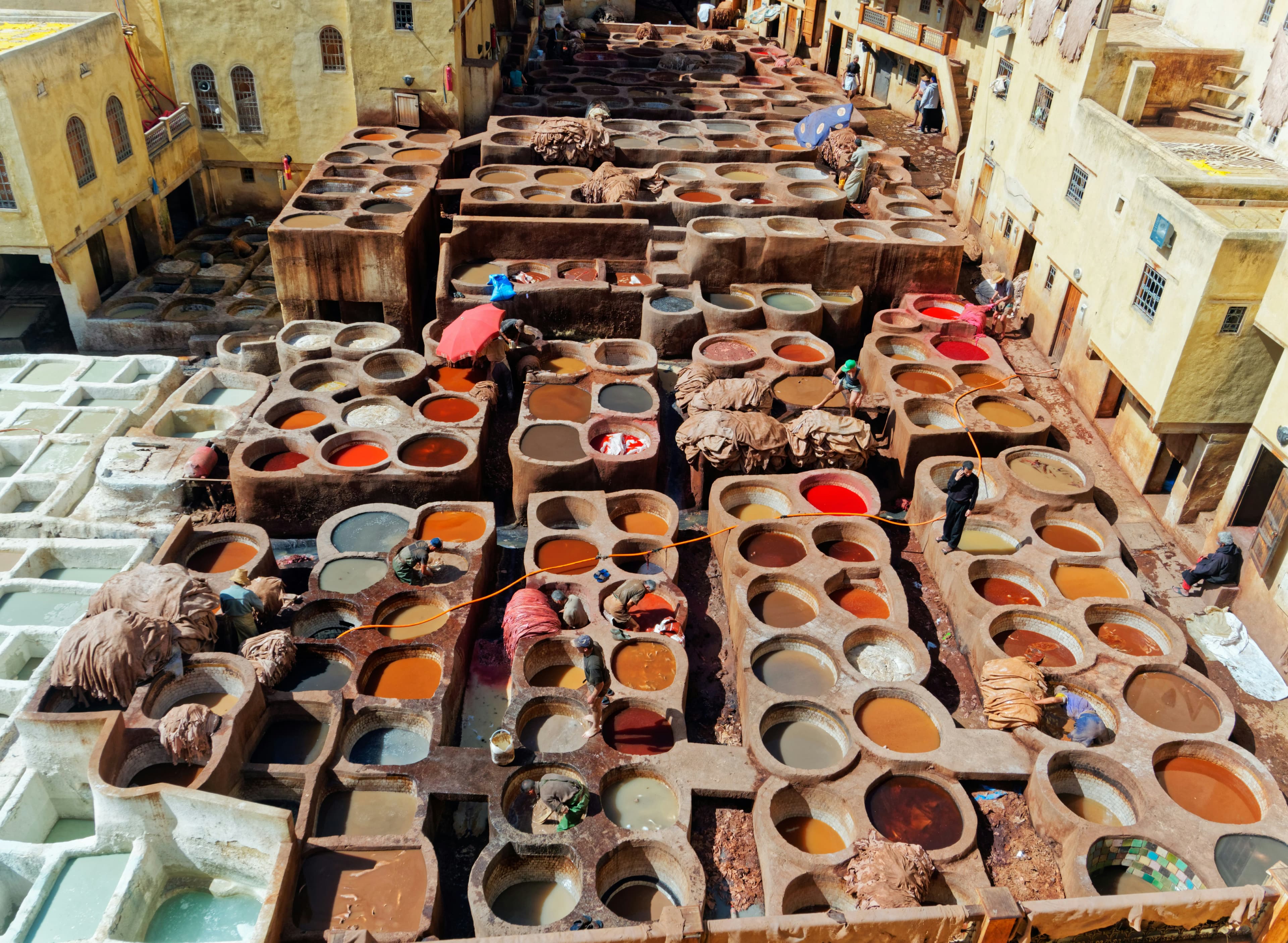
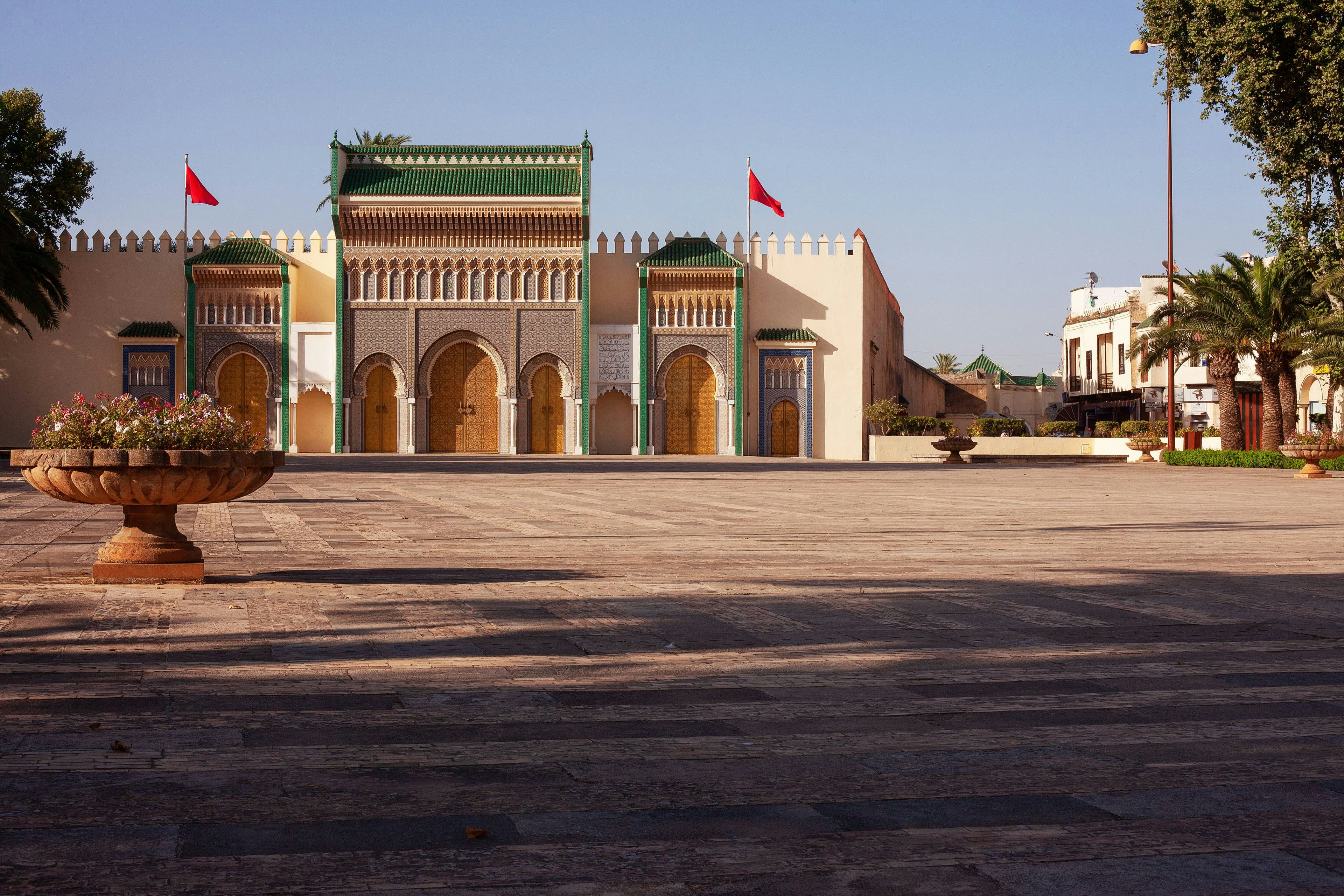
A full private day inside Fez el-Bali with a guide who grew up in these lanes — a UNESCO World Heritage medina of 9,400 streets continuously inhabited since the 9th century. The morning moves through the great monuments: the Al Quaraouiyine University, founded in 859 AD and the world's oldest continuously operating university; the Bou Inania Madrasa, with 14th-century tilework among the finest surviving examples of Marinid craftsmanship; and the Chouara Tannery, visible from a riad rooftop as a mosaic of circular stone vats filled with dye in saffron, poppy, indigo, and mint. The afternoon is craft quarters and the souks that supply them — the zellij tilemakers, the brass hammerers, the carpet weavers operating looms that have not been redesigned since they were built.
Roman Ruins and the Medina's Edges
Volubilis
A morning excursion from Fez to Volubilis — a remarkably intact 2nd-century Roman city 60 kilometres north, where the triumphal arch still stands and the mosaic floors of the patrician houses have been lying in the Moroccan sun for 1,800 years without anyone telling them they are remarkable. Return through Moulay Idriss, the holy hilltop town that gave Morocco its founding dynasty. Back in Fez by early afternoon for a private cooking class with a Fassi chef — the bastilla, the tagines, the preserved lemons and ras el hanout — before a final evening in the medina, which by now feels navigable in a way it did not on day one.
Into the High Atlas
Atlas Mountains
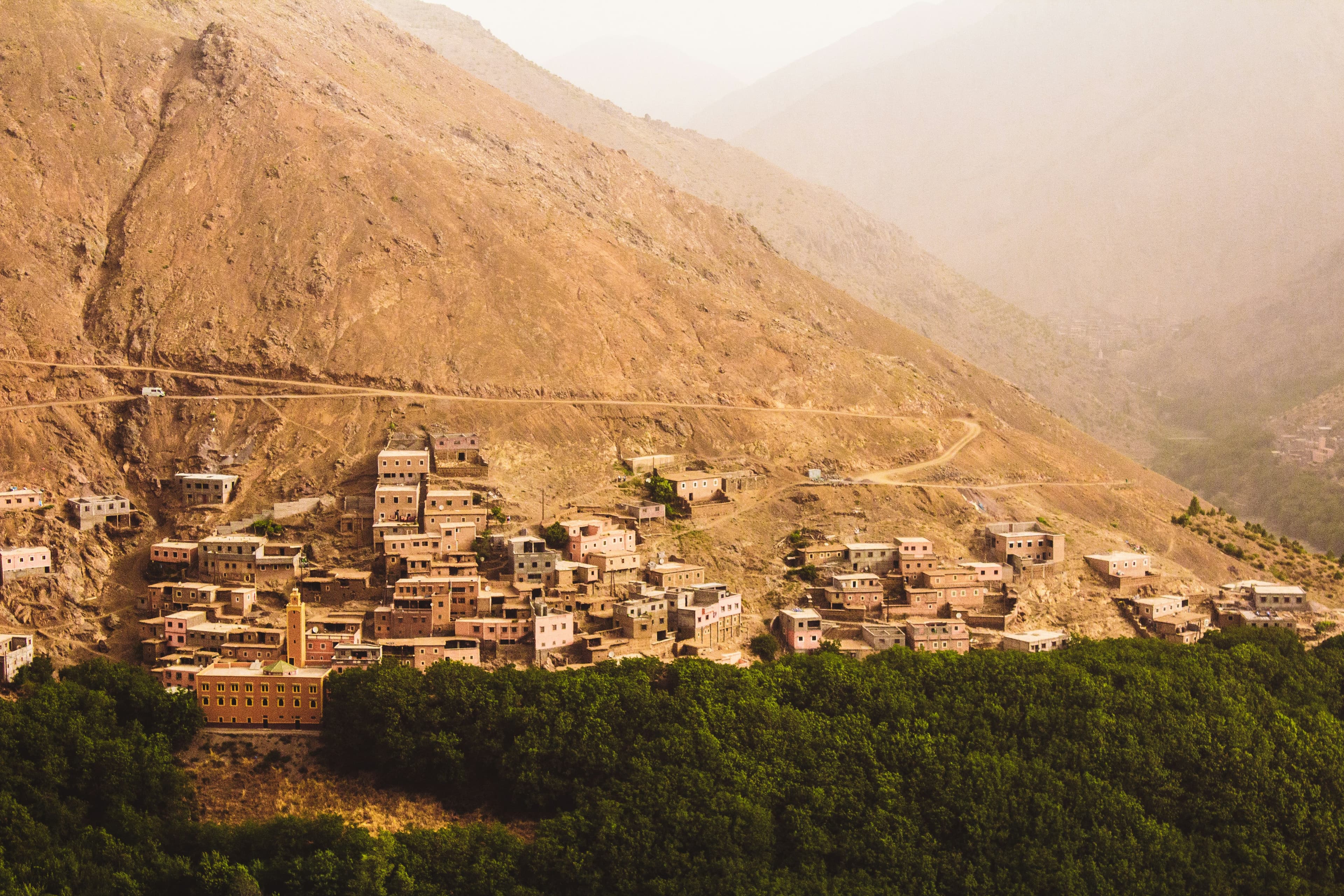
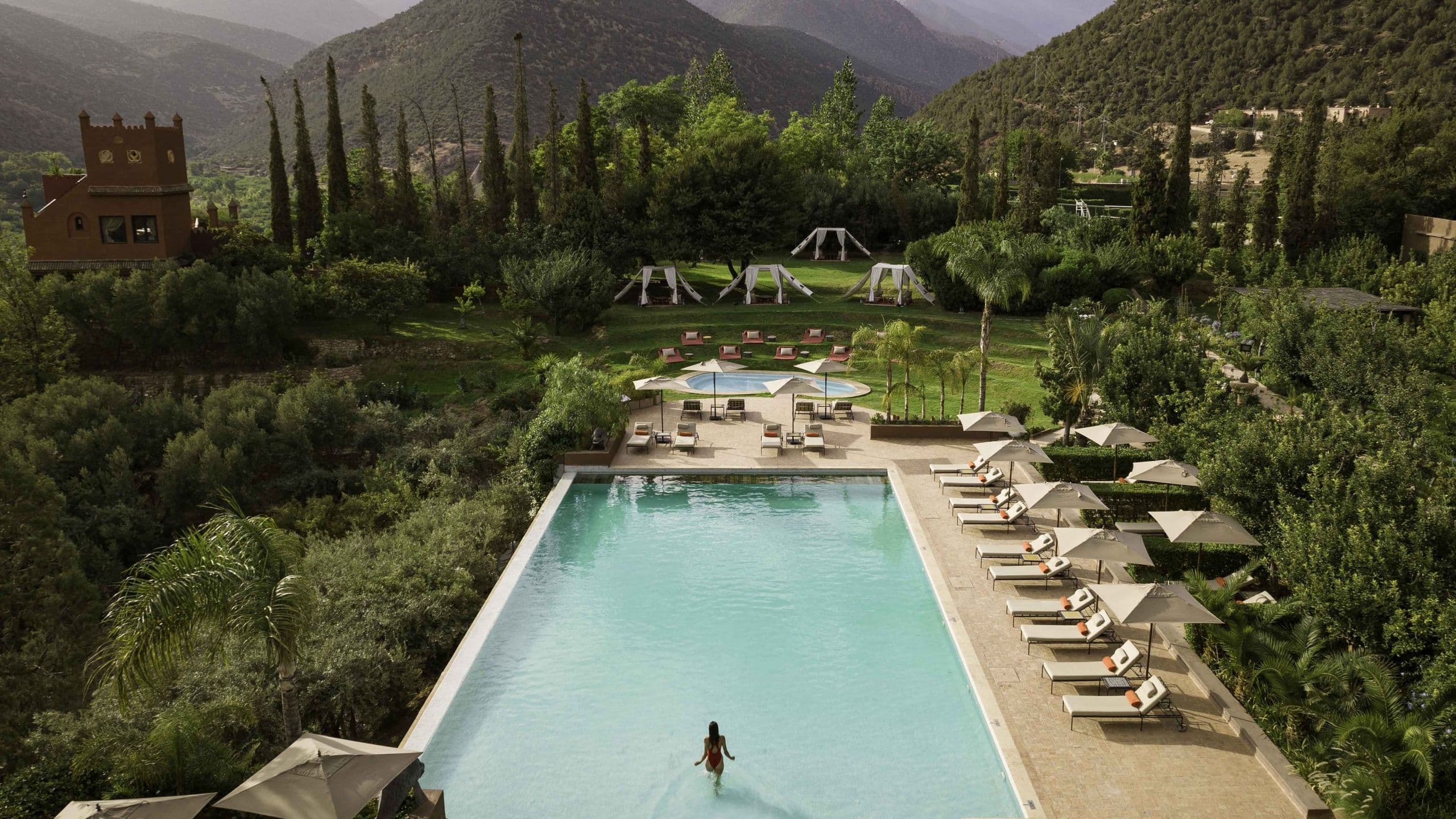
A morning departure from Fez — flight or private drive south — arriving into the High Atlas and Kasbah Tamadot in the village of Asni. The kasbah sits at 1,100 metres with the Toubkal massif — North Africa's highest peak — visible on a clear day from the terrace. The afternoon is entirely the Atlas: a walk into the Berber village with one of the kasbah's guides, where the terraced fields and mud-brick houses and the rhythm of daily life have not been substantially altered by the 21st century in the ways that Fez or Marrakesh have been. Return to the kasbah for a hammam session and dinner on the terrace as the mountains go dark.
Mountain Days
Atlas Mountains
A full day in the High Atlas with the kasbah as base. The morning opens with a guided hike through the valleys and terraced agricultural land surrounding Asni — your guide is Berber, born in the valley, and the walk covers terrain and stories that no tour desk could have designed. Return to the kasbah for lunch and an afternoon at complete leisure: the pool, the spa, the private terrace with its particular quality of mountain silence, or a yoga session on the rooftop if the mood is right. The evening closes with one of the kasbah's signature dinners — Moroccan cuisine at altitude, which is a different meal from the same cuisine at sea level.
The Road to the Sahara
Merzouga
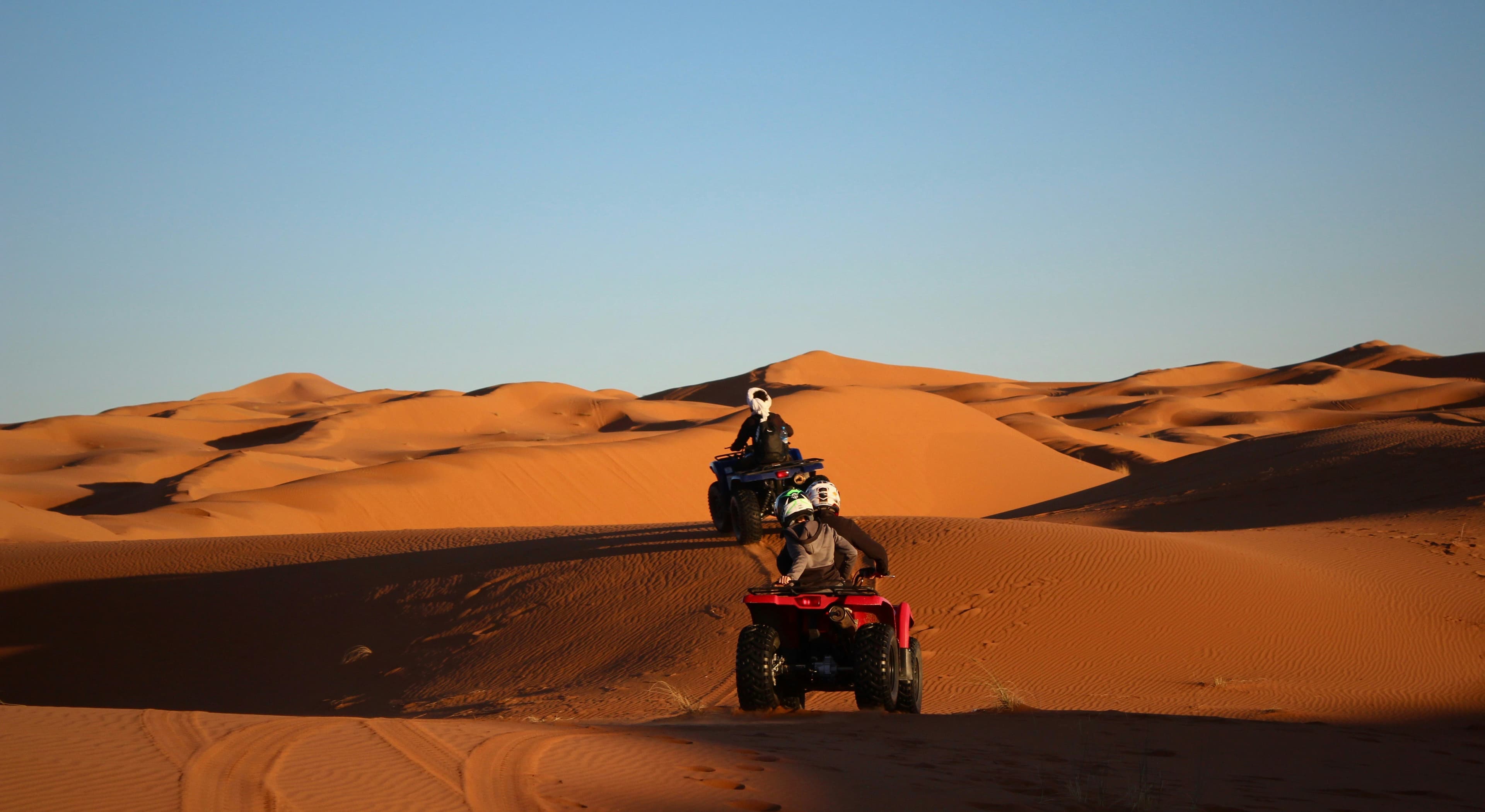
An early departure from Kasbah Tamadot and a short transfer to Marrakesh Menara Airport for the flight to Errachidia — a one-hour hop that exchanges the green Atlas valleys for the hammada, the flat rocky desert that precedes the Sahara proper. A private two-hour transfer from Errachidia south to Merzouga, arriving at Sunrise Palace in the middle of the afternoon as the dunes begin to glow. Check into one of the twelve rooms and spend the first hour doing nothing except understanding where you are. Then, as the light drops: a private camel trek into the Erg Chebbi dunes at dusk — the most cinematic hour in the Moroccan south, the shadows lengthening across 150-metre dunes in every shade of orange that exists, and the sky above the Sahara performing without self-consciousness.
The Desert at Its Own Pace
Merzouga
A full day with no fixed schedule, which is the correct approach to the Sahara. Wake before first light for a private walk to the base of the dunes — the Erg Chebbi in the first hour of morning is amber then gold then orange, and the silence before the wind starts is total and belongs to no one. Return to Sunrise Palace for breakfast on the rooftop with the dunes filling the entire northern view. The day is yours: sandboarding down the faces of the dunes, 4x4 excursions into the hammada to visit a nomadic Berber family, a visit to the village of Merzouga itself, or an afternoon of absolute stillness by the pool. The desert rewards patience and punishes itineraries. In the evening, dinner at the hotel as the dunes turn purple and then disappear into the dark.
The Southern Road
Aït Benhaddou
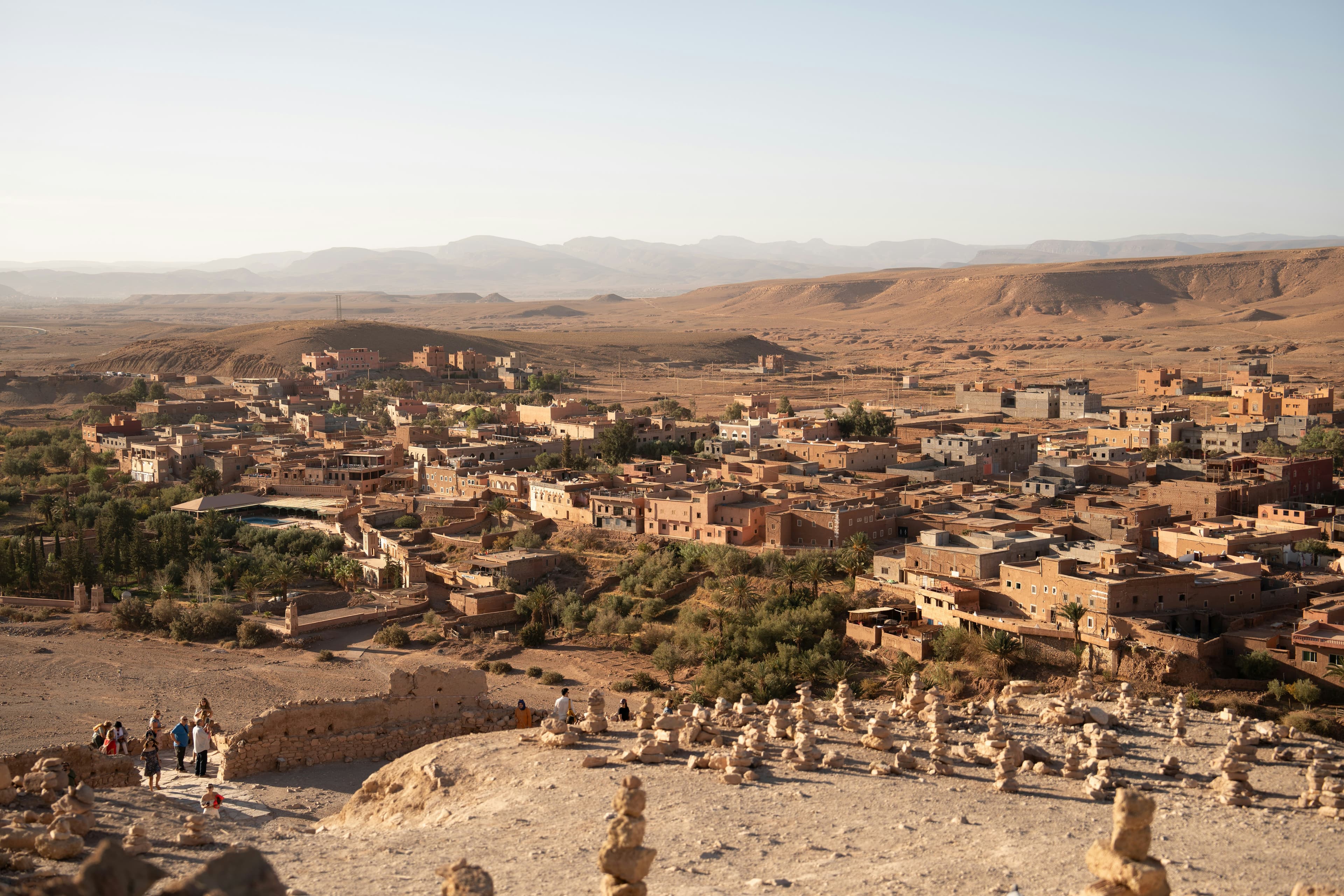
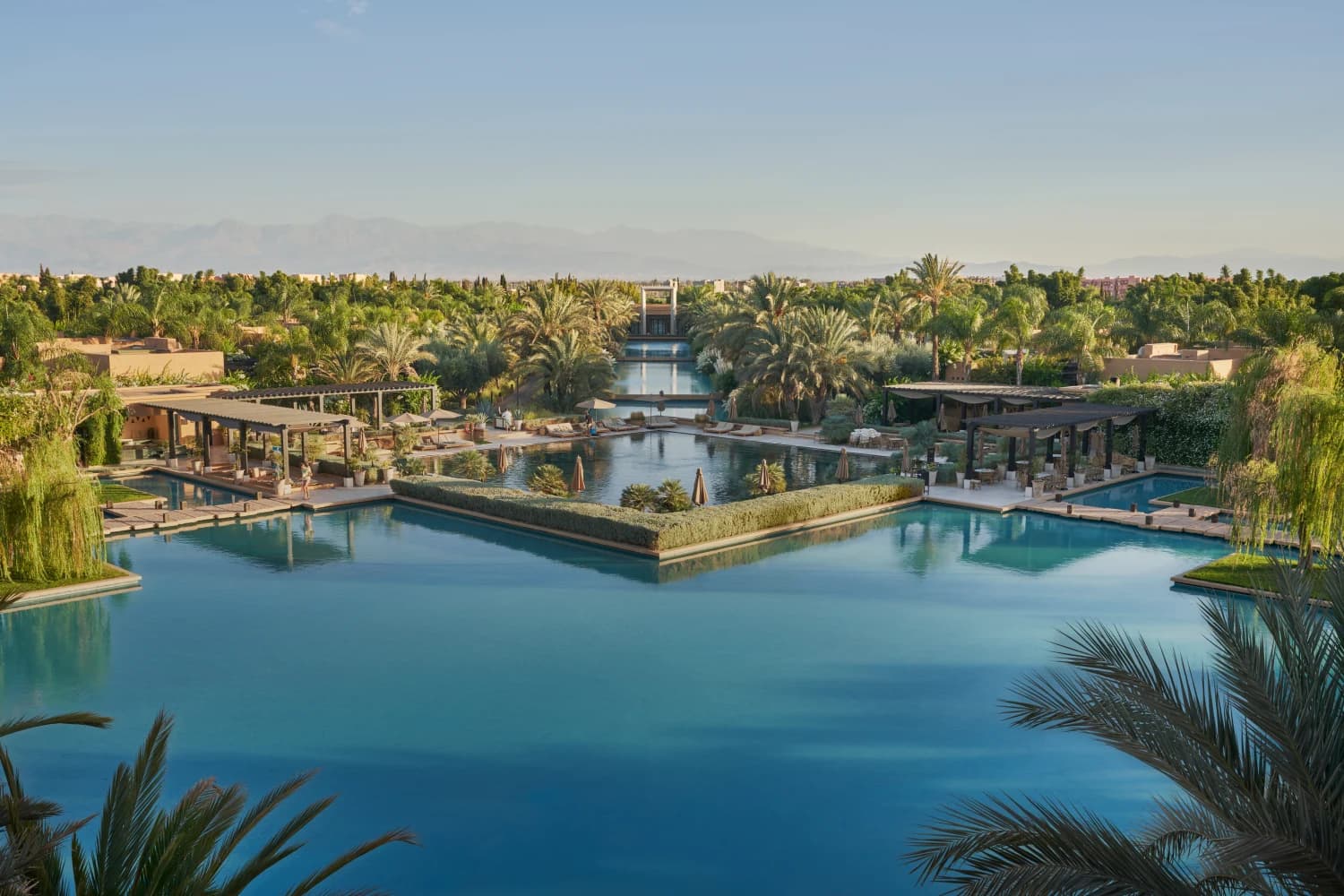
The return from the Sahara to Marrakesh is not a transfer — it is a journey. A private full-day drive westward through Morocco's most dramatic interior: the Todra Gorge, where 300-metre rock walls close in to a passage barely wide enough for two cars; the Dades Gorge and its valley of kasbahs, where the road winds through a landscape of eroded rock towers and ancient fortified houses; and Aït Benhaddou — a UNESCO World Heritage ksar perched above the Ounila River where Gladiator, Lawrence of Arabia, and Game of Thrones have all used the same golden walls. Arrive into Marrakesh by early evening and check into the Mandarin Oriental in the Palmeraie — where the olive and argan gardens close around you and the city is present but at a correct distance.
The Red City
Marrakesh
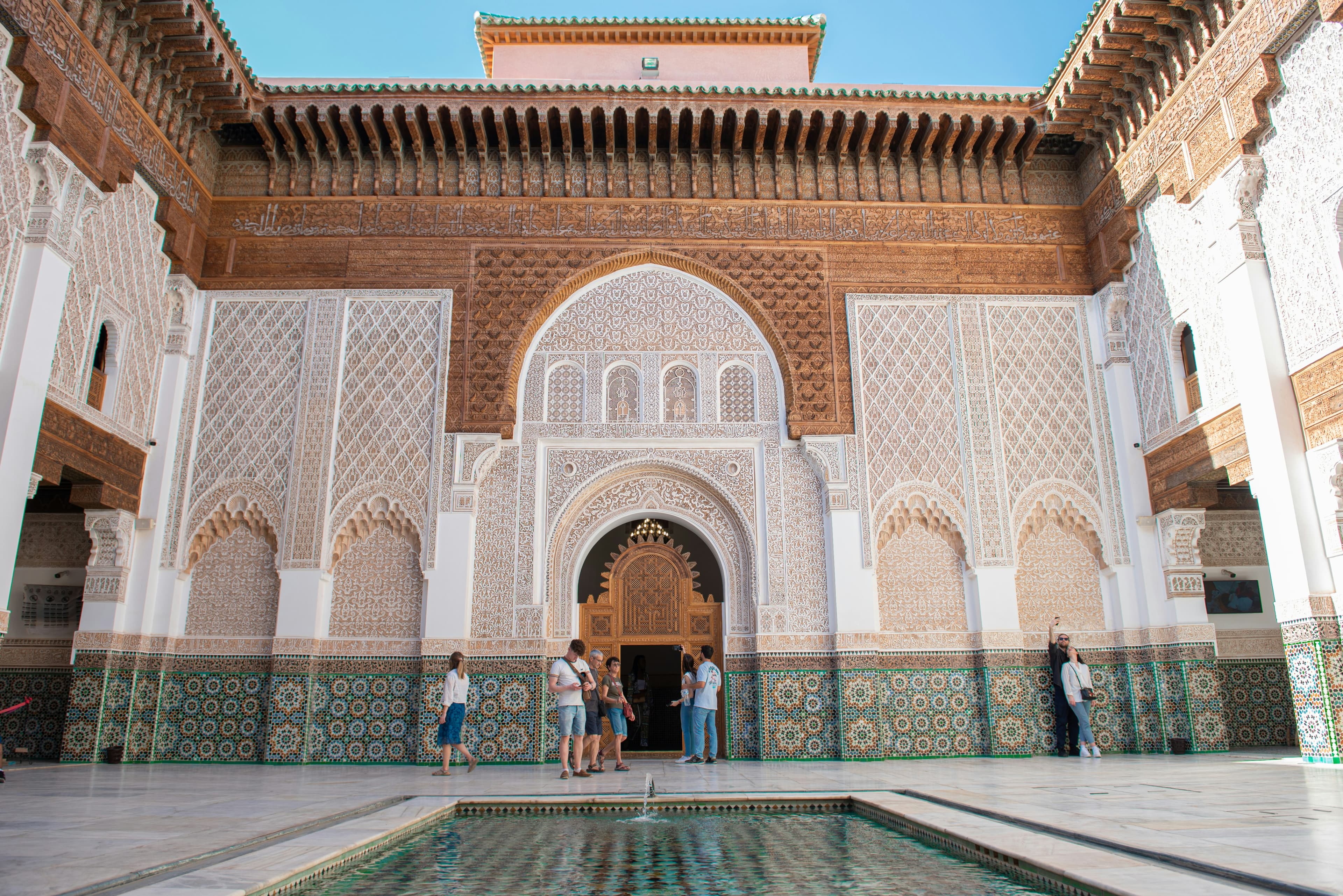
A full private day in Marrakesh with a guide who understands the difference between the Marrakesh that exists for visitors and the Marrakesh that exists for everyone else. The morning moves through the medina: the Bahia Palace with its acres of carved cedar and painted tilework; the Saadian Tombs, hidden behind an unmarked wall for centuries; and Jardin Majorelle — the electric-blue villa and garden designed by Jacques Majorelle and restored by Yves Saint Laurent, still the most precise single object in the city. Djemaa el-Fna in the afternoon shifts through its stages: the juice sellers and the storytellers and the snake charmers give way by evening to the smoke of a hundred food stalls and a noise level that has no equivalent anywhere. The evening closes with a private dinner at the edge of the Agafay Desert — lanterns, low tables, the Atlas Mountains on the horizon as the sky goes dark.
Souks, Hammam and the Palmeraie
Marrakesh
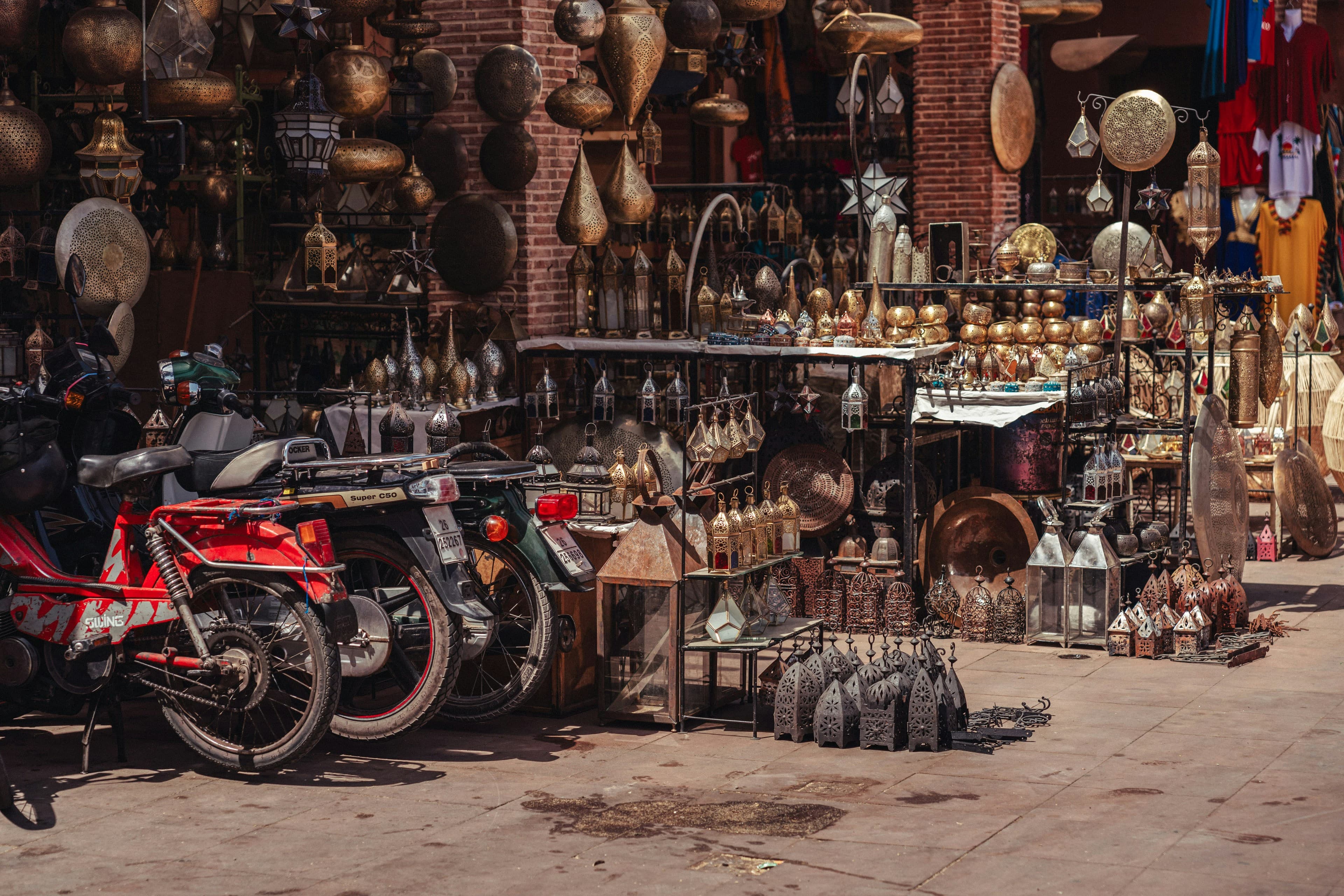
A final full day that moves at whatever pace the last night of a long journey deserves. A morning in the souks with a private guide who knows the difference between the tourist copper and the copper that Marrakeshi households actually use — the spice quarter, the lamp makers, the textile merchants in the northern medina who have been selling the same Berber weaves since before the French arrived. Midday at the Mandarin Oriental's spa: a full traditional hammam with kessa exfoliation and argan oil, which is the correct thing to do the day before a long flight. The afternoon is the pool, the gardens, the particular quality of Moroccan afternoon light in an olive grove. A final dinner at one of the hotel's restaurants — rooftop, garden, or the wine bar — on the night before departure.
Departure
Marrakesh
A final breakfast in the Palmeraie gardens, then a private transfer to Marrakesh Menara Airport. Marrakesh handles direct international connections to London, Paris, Madrid, Amsterdam, and Dubai, with onward connections to major US cities via the Gulf and European hubs. For India-based travellers, the Doha and Dubai connections via Qatar Airways and Emirates are both well-served from Menara. Leave carrying the specific weight of a country that did not behave like anywhere else and had no interest in doing so.
Why Book With Us
The Bohemian Boys difference.
Tailored Journey
Every itinerary is shaped around how you travel, not pre-packaged.
Insider Access
Doors that don't open for general travellers open for ours.
Global Expertise
Designed by people who have lived and travelled the destinations.
Membership Access
A circle of like-minded travellers, beyond the trip itself.
More to Explore